

15

Jun

10 Popular Types Of Natural Stone Countertops

Natural stone countertops have this unmistakable natural feel, unique appearance, and excellent durability, but they can be costly and high maintenance, and you have to choose from a lot of types, which can be confusing. There are many more natural countertops than the popular ones: marble and granite countertops. So, here are some common and popular types of natural stone countertop surfaces you can choose for your kitchen.

Types of Natural Stone Countertops

Granite Countertops

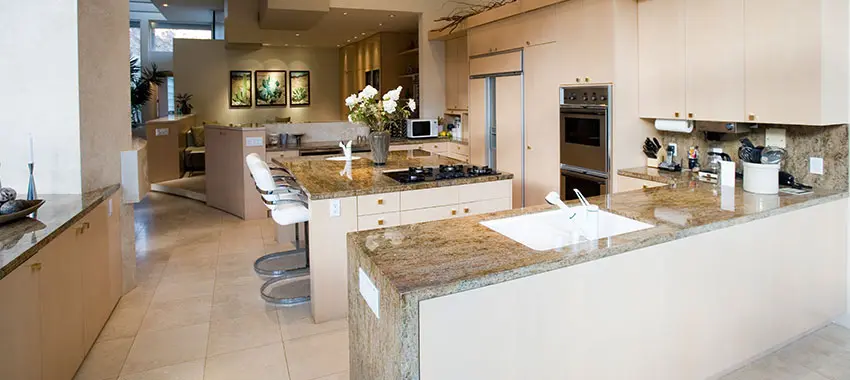
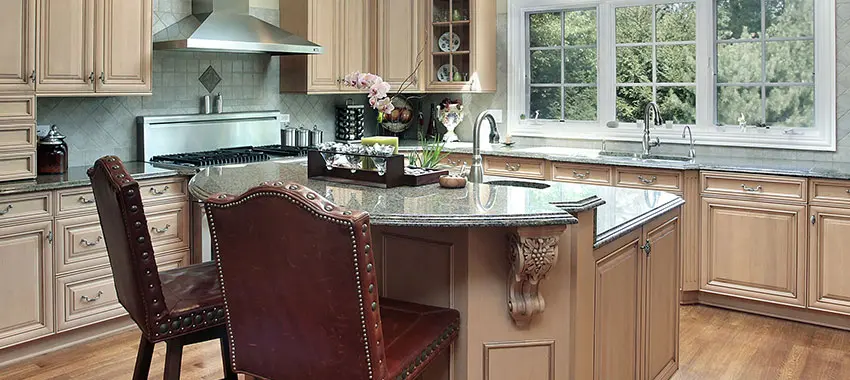
Granite is the most popular type of natural stone countertop surface. The reasons are its aesthetics, durability, heat-resistance, scratch-resistance, and availability. Granite countertops can last for decades and due to that, adding granite countertops to your kitchen can boost your home’s value.

Another great thing about granite countertops is their huge variety. You can find most kinds of colors and patterns, such as white, black, blue, red, green, yellow, and brown. There are also many exotic colors of granite, like vivid blue, emerald green, purple, multicolor slabs, etc., though those are more expensive.

Marble Countertops

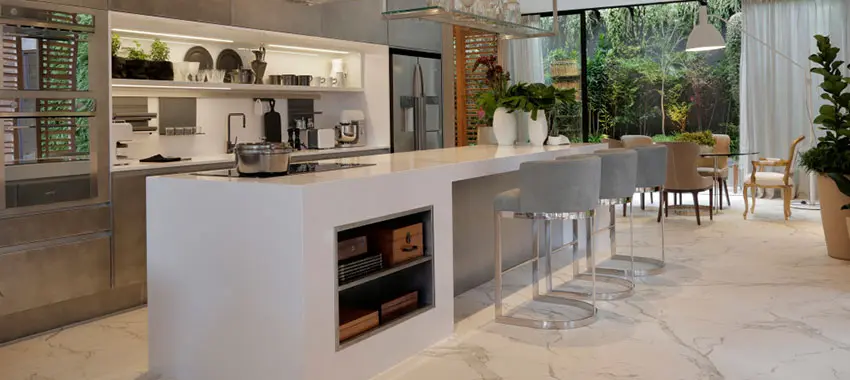
Marble countertops are all about appearance. They offer unique and unmatched beauty, even though they are not as durable, scratch-resistant or heat-resistant as granite or most natural stone countertop options.

With mediocre durability and high maintenance, you would think that marble countertops won’t add value to your home, but if you know anything about countertops, you know that marble surfaces offer excellent ROI in high-end, luxury homes. However, if you also want practicality with a higher home value, either choose granite or quartzite countertops – in the realm of natural stone countertops.

Quartzite Countertops

This natural stone is very similar to marble in appearance, but it’s highly durable, scratch-resistant, and heat-resistant. Quartzite feels like nature kind of gave us a hybrid of granite and marble. We get the looks of marble and the durability of granite.

In addition to that, quartzite has an impressive color variety. You can find many shades with dramatic veining, like white, gray, beige, pink, blue, and more. It also improves resale value, but it costs more compared to granite and is similarly priced as marble.

Soapstone Countertops

Soapstone countertops are fairly durable and heat-resistant. But the unique thing about them is that, unlike other natural stones, they are almost non-porous. So, you don’t need to seal them as frequently. They are commonly available in blue, gray, green, and black colors and offer a rustic appearance. Moreover, soapstone surfaces develop a natural patina or shade over time, which is liked by many people while disliked by others.

The downside is that they are not as hard as granite or quartzite and can be scratched easily. Soapstone slabs are usually costlier than granite and sandstone, and cheaper than quartzite and marble countertops.

Sometimes, people confuse it with sandstone, which is a much cheaper, softer, more porous, and less durable natural stone countertop option.

Limestone Countertops

Limestone is a unique natural stone. It has soft, earthy tones that work well with most types of kitchen styles, be it traditional, transitional, modern, contemporary, or minimalist. Commonly, limestone has beige, cream, white, off-white, gray, yellow, and brown tones. You can also get fossil-rich multi-tone limestone slabs if you want the countertop to be the focal point of your kitchen.

So, it offers luxury-like aesthetics without being as costly as marble, quartzite, or high-end granite. However, the problem is that it’s a soft stone and prone to scratches and damage. Plus, it’s highly porous, much like sandstone, so frequent sealing must never be ignored. On top of that, limestone is also sensitive to chemicals much more than other natural stones. So, you have to take care of it.

Travertine Countertops

A type of limestone, travertine offers a soft, warm appearance with earthy tones like cream, ivory, beige, tan, walnut, gold, reddish brown, etc. These countertops are usually for rustic, traditional, and Mediterranean style kitchens.

Travertine has the durability and heat resistance associated with natural stones, but it’s still much softer and more porous than most natural stones, making it prone to stains, scratches, chipping, and etching. But all in all, it’s a good, cheap alternative for budget-friendly kitchens that want to look luxurious.

Slate Countertops

You may commonly hear about slate in roofing, but the metamorphic rock is also used for flooring and countertops. Slate has its uniqueness in colors and offers a muted color range, such as charcoal, black, green, and gray. They couple perfectly with a matte finish. However, the color choices are limited.

Similar to soapstone, slate countertops are also almost non-porous and requires less frequent sealing compared to granite and marble. It’s also highly heat resistant and can withstand outdoor conditions if installed in an outdoor kitchen. Plus, it’s low cost compared to quartzite, marble, and other high-end natural stones.

Even though slate is durable, it’s prone to chipping due to its layered composition. It can also be scratched by cleaning tools or harsh chemicals. However, this is true for most natural stone and also engineered stone countertop materials.

Onyx Countertops

When it comes to luxury countertops and statement pieces, onyx countertops are highly regarded. Their dramatic veining, striking colors and patterns, and translucent nature help them take the center stage wherever they are installed. The translucency is amplified with backlighting for maximum visual impact.

But there are many downsides to onyx countertops. The predictable one is that they are one of the most expensive natural stone countertop options. Onyx is also fragile and soft, as it ranks 3 to 4 on the Mohs scale (granite is 6-7, quartzite is 7, and marble is 3-5). So, it can chip, scratch, or even crack with high impact. It can also be etched with chemicals and is highly porous.

So, onyx countertops are not for busy kitchens or primary kitchen worktops. They are usually for low-traffic spaces or parts of the kitchen.

Basalt Countertops

Basalt in Latin means “very hard stone”, though it ranks 5-6 on the Mohs scale, and granite and quartzite rank higher than it in hardness. But still, it’s a hard and durable stone, just not as hard as granite, and can be scratched with knives. You will mostly see basalt countertops in modern and contemporary kitchens for their uniform and elegant dark gray to black color tones.

Like other natural stones, basalt is porous and requires sealing. It’s also susceptible to acids and can be etched if spills are not cleaned immediately or if acidic cleaners are used.

Sandstone Countertops

As stated in the soapstone section, sandstone countertops are budget-friendly and offer earthy tones for kitchens and bathrooms, like gray, charcoal, brown, tan, beige, and others. It also handles heat well, but that’s about it when it comes to the benefits.

Its drawbacks include high porosity, which prompts you to seal it once every few months, and poor durability that encourages scratches, dents, and damage.

Other Natural Stones

There are other natural stones as well, which include bluestone, dolomite, schist, serpentine, gneiss, and other exotic natural stones.

Conclusion

When it comes to natural stone countertops, granite is the most popular one, followed by marble and quartzite. They make up more than 90% of natural stone countertops in the U.S. However, there are other niche options as well to suit a kitchen style or vibe. So, you have a lot to choose from. To check out the samples of various natural stones and for proper fabrication and installation, get in touch with a granite contractor Rockville.
13

Dec

Engineered Stone Vs. Natural Stone Countertops

There are many countertop materials to choose from, but they’re divided into two major categories. They’re either naturally sourced or they’re engineered for reinforced strength and durability. Popular natural stones are marble and granite while common engineered stone countertops are solid surface and quartz countertops. Here is everything you need to know about the two different types of countertop stones.

Differences Between Engineered Stone And Natural Stone Countertops

The Material

First and foremost, you need to know what natural stone and engineered stone are.

Natural Stone Countertops

As the name suggests, natural stones are, well, naturally obtained. They’re made by nature and in nature. Some are naturally made by incorporating molten rocks, mica, and other materials fused together at high temperature and pressure, whereas others are made inside mountains, underground, and even in water.

Natural stones are made through natural processes and they have different compositions. They include granite, marble, quartzite, sandstone, limestone, travertine, onyx, soapstone, and many more options. These natural stones have different properties, different looks, different ranges of durability, and they’re just overall amazing.

Engineered Stone Countertops

When it comes to engineered stones, you have to understand that they are man-made materials. If you see the suffix, engineered with any stone or even material, then you can automatically assume that it is man-made and it’s either treated with a mix of natural and synthetic materials or made solely of synthetic materials.

There are many engineered materials out there, but we talk specifically about engineered stone surfaces, they are: quartz, solid surface, porcelain, and sintered stone. Porcelain is not exactly a stone because it’s made of clay, but it’s still categorized in engineered stones.

Now, quartz is a popular one. It’s made by pulverizing rocks and making them into stones with the help of strong binding agents and adhesives. Just like natural stones, the durability, heat resistance, and other properties differ from stone to stone.

Durability

The next thing you can compare between natural stone as well as engineered stone is the durability. You want to select a stone surface that is amazing in quality as well as durable.

Natural Stone Countertops

Most of the natural stones are amazing in durability. You don’t need a lot of convincing when it comes to natural stones, because they are stones that are literally made under high pressure and temperature. They are not made to crack.

Natural stones have a lot of strength and most stones outlive everything else, given that they’re maintained and taken care of. Granite and quartzite are two of the most durable natural stones followed by soapstone, slate, marble, and others.

Engineered Stone Countertops

Engineered stone surfaces are also strong. They’re really amazing when it comes to durability, because they are literally treated to make them stronger and enable them to endure various elements. Quartz, for instance, is an amazing material with outstanding durability even though it lacks a bit in heat resistance due to resin in its composition. However, in strength and durability, it rivals granite. Then, there are sintered stone countertops that are both durable and heat resistant.

Maintenance

Next up is the maintenance. Every stone in this world, whether it be natural or engineered, needs to be maintained. That is just how things go. You need to clean them, seal them, and keep things away that can damage them.

Natural Stone Countertops

When it comes to natural stones, you are usually high maintenance. You can’t just make do with cleaning. You also have to seal these babies because natural stones are porous. That is just something that comes with the properties of natural stones.

They have small holes on the surface that can suck in water and moisture and if you don’t seal your natural stone countertops, then they can cause stains on the surface, which isn’t good at all. If you want a natural stone that doesn’t require sealing, choose soapstone or consider engineered stone surfaces.

Engineered Stone Countertops

Since engineered stone countertops are man-made, their properties can pretty much be controlled. So, it is a very good thing to know that engineered stones like quartz, solid surface, and sintered stone are non-porous.

They don’t have the tendency to suck in moisture present on the surface. So, you can totally get away without sealing these materials. You just need to give these materials a good wipe down and you’ll be good to go.

Variety

People love options. They love to have a list of colors and designs to choose from. Some might think that it adds to the confusion, but it is what it is.

Natural Stone Countertops

There are lots of options in natural stone countertops depending on the materials but the options are not as much as in engineered stone surfaces. Why? Because natural stones are, well, naturally made, so the colors in which natural stones are available are default colors and there is only a slight chance of ever having exotic colors and those unique colors usually cost much more.

In short, when it comes to customized designs and colors in natural stones, you have to put a lid on your choices. You can only choose from what is available. This is good for most people, but some just don’t vibe well with it.

Engineered Stone Countertops

Engineered stone options regarding colors and designs and even patterns are literally endless. You can get almost any color, design, and pattern your heart desires. Since they are man-made, the choices are in the hands of the manufacturer.

There are just as many colors in engineered stones as you can think of and you can even customize them to your liking. This is something that a lot of people love.

Cost

The cost is also something that a lot of people want to know about. You want to invest in a good stone, no doubt, but you don’t want to spend a fortune on them.

When it comes to natural stones, they can run a bit more expensive than man-made materials. However, even engineered stones can be pricier than regular man-made materials. The reason is that engineered stones are treated and reinforced with more strength and properties that make them as hard as rocks and more durable. Anyway, in both types, cost depends hugely on the quality of the stone.

Resistance To Heat & Water

Lastly, you might also want to know about the resistance to heat and scratches and it’s quite interesting.

Natural Stone Countertops

Natural stones are great when it comes to heat resistance. For instance, granite, quartzite, and soapstone can resist temperatures up to 450–500°F, whereas, marble and travertine can only withstand up to 250–300°F.

In the scratch resistance category, there are some natural stones that don’t do so well like soapstone, onyx, and marble. However, there are some that are excellently scratch-resistant like granite, quartzite, basalt, and sandstone.

Engineered Stone Countertops

Engineered stones are great when it comes to scratch resistance, but not so much when it comes to heat. These stones can get blistered by heat really easily such as quartz (withstands temperatures up to 300–350°F).

The main reason why it happens is that these stones have resin in them and they are not able to resist heat, which is why the surface of these stones can get darkened after you put very hot pots and pans on the surface. So, you need to be careful when it comes to both of these stones.

However, there are sintered stone and porcelain slabs that are both excellent in heat and scratch resistance.

Conclusion

Engineered and natural stones both have their own sets of pros and cons. Well, now you know exactly which one to choose in case you’re replacing your kitchen countertops. If you want to take a look at various engineered and natural stone options, consult a quartz countertop contractor Potomac.

28

Aug

Granite Vs. Soapstone Countertops

When you’re changing up your countertops, you have many options to choose from. However, if you want to go for natural stones, you can choose from many materials too. Here is everything you need to know about soapstone and granite countertops.

A Comparison Between Granite And Soapstone Countertops

The Material

Firstly, need to know how granite and soapstone differ from each other down to the root and the composition of the material.

Granite Countertops

When you think of granite, you think of a dark stone with a mosaic-like pattern and a slightly shimmery surface that leaves you staring at the stone in awe. Granite is an igneous rock and it is made out of a variety of minerals, pulverized rocks, and mica, all mixed and molded together under high temperature and pressure. The result is a material that is not only easy on the eyes, but it is also very durable and strong.

Soapstone Countertops

Soapstone is exactly what it sounds like. Soapstone is a material that is literally strikingly similar to soap. It has a very slippery and lustrous feel and it is something that looks like marble minus the dark veining.

The general composition of this stone is talc, which is mainly the reason why it is so soft and slippery in feel. It is made when the tectonic plates of the Earth are moved and sub-ducted. Soapstone is very easy to form into many designs and shapes, since it is so easy to carve.

Durability

The next thing you want to consider when it comes to choosing a material for your kitchen is durability. You obviously want to go for a material that is easy to manage, but it should also be strong and not crack or break under the slightest of forces.

Granite Countertops

Granite is amazing in the durability department. It is literally a material that will last you for a long time. Granite is a material that is going to last you forever, given that you take care of it. You just need to set it, maintain it, and forget it, and you’ll be good to go for a long time.

Soapstone Countertops

The same can’t be said for soapstone countertops. Even though soapstone is not a stone that can just crumble when you look at it wrong, it is not as strong as granite or other natural stones. Since the main composition is talc, this stone is very soft and it needs to be dealt with very carefully.

You should take care not to put too much force on it or smash things on top of it with too much force. Otherwise, it is just going to ruin the countertops for good.

Heat Resistance

Since you’re in the kitchen, the heat will obviously turn up. You are cooking things, you’re handling hot foods and pans, so you want to go for a material that is heat-resistant to a great extent.

Granite Countertops

Well, if you go for granite countertops, then you made the right choice, because it is literally made under such high temperatures and pressures that the stone will not be affected by kitchen temperatures. You don’t have to worry about the sizzling steaks or hot pans and pots blistering the surface of granite, because it will take everything like a champ.

However, it’s not recommended to test the heat resistance of granite. So, use trivets and coasters to keep the surface protected.

Soapstone Countertops

One major disadvantage of soapstone is that it is not as heat-resistant. Usually, when it comes to natural stones, they have amazing heat resistance, but that is not the case with soapstone. It is a light material, so any dark stain will look even darker on the surface.

As for the stone itself, it is very fragile when it comes to heat and if you want to put hot things or utensils on it, then you should use trivets or coasters to make a barrier between the hot pan and the soapstone surface.

Maintenance

Next up is the maintenance of the stones and you really want to make the right decision in this department, because you want to choose a material that is not only easy to clean and take care of, but it should also be stress-free when it comes to the selection of cleaning products.

Granite Countertops

Granite, even though it is an amazing material and has unmatched durability, is a bit sensitive when it comes to acids and abrasive cleaners. You want to use regular water and detergent to clean granite kitchen countertops.

If you want, you can get your hands on those specialty cleaners that are meant for granite countertops, but those can add up over time. Sealing is a must if you don’t want your countertops to get ruined.

Soapstone Countertops

Soapstone countertops are also meant to be handled with care. Since it is a very soft material, you want to keep acids and bleach far, far away from this stone. It can react with the stone and cause large holes to form on the surface and that is not what you want. Again, stick to the basics and you’ll be good to go and you won’t run into any problems.

Cost

You also want to keep the cost and installation expenses when it comes to the two materials.

Granite and soapstone are both natural stones, so they are obviously going to be expensive than other man-made materials, but if you’re comparing the two, then granite is going to be more expensive than soapstone.

Granite is just better in every way, but the price is where a lot of people think it is unattainable. It is expensive, which is why a lot of people can’t buy this material.

Water & Scratch Resistance

Natural stones are seldom naturally waterproof. They are like hard sponges that will suck up any water and moisture on the surface.

Granite Countertops

Granite needs to be sealed, as you’ve already seen. It can’t do without sealing and if you’re working in the kitchen, getting everything wet, then you better believe that the countertops will also get soiled and they will get ruined if you don’t take care of them and seal them.

When you’re using knives in the kitchen, you can also think about scratch resistance and you want to choose a countertop that is not as soft or easily scratched. Well, granite will tick those boxes for you, because it is amazing and hard and a bit of knife action doesn’t cause any problems for granite countertops.

Soapstone Countertops

Soapstone also needs to be sealed and it also needs to be dealt with carefully when it comes to knives. The stone is very soft, so it is very easy to scratch it, even if you drag something blunt along the surface. As for sealing, it will only save soapstone countertops from getting those very hideous water stains, so you want to do your best to avoid that at all costs.

Conclusion

Granite and soapstone are both very beautiful and amazing options for kitchens if you want something that is timeless and looks beautiful for a long time to come. However, when you consider other things as well apart from beauty, then granite is a better option than soapstone. Contact a granite contractor Rockville who can guide you through entire process from choosing a countertop material to installing the slab in your kitchen.