
31

May

Which Countertop To Choose For A Modern Kitchen? 10 Options

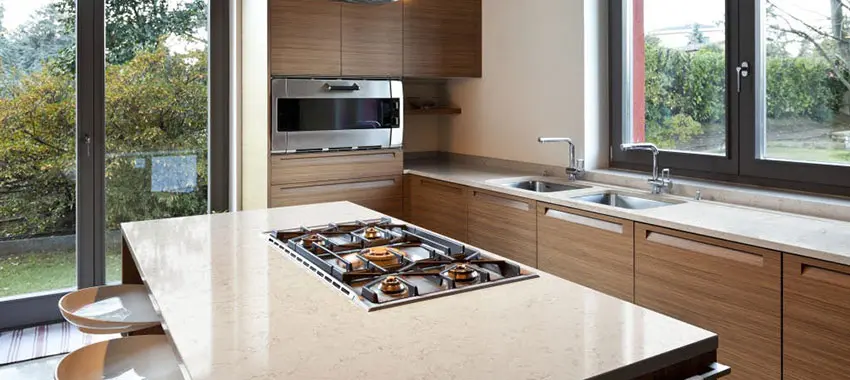
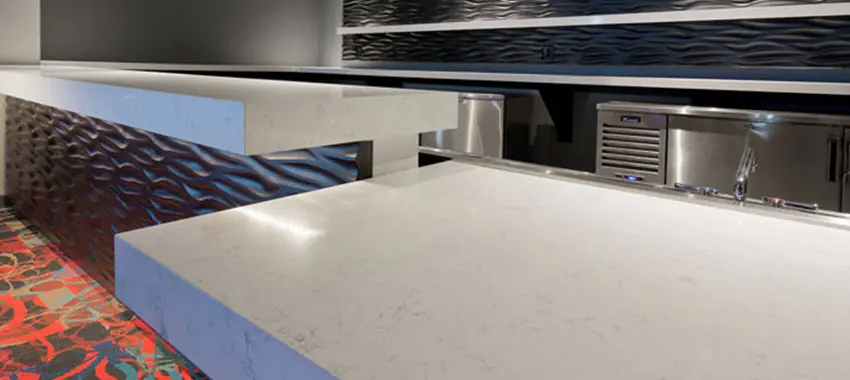
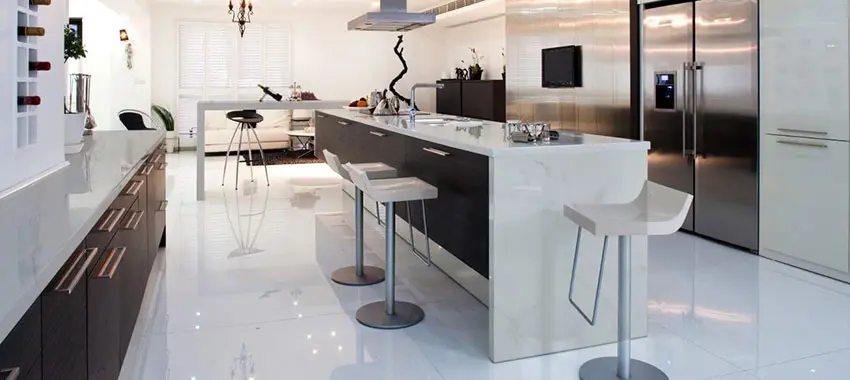
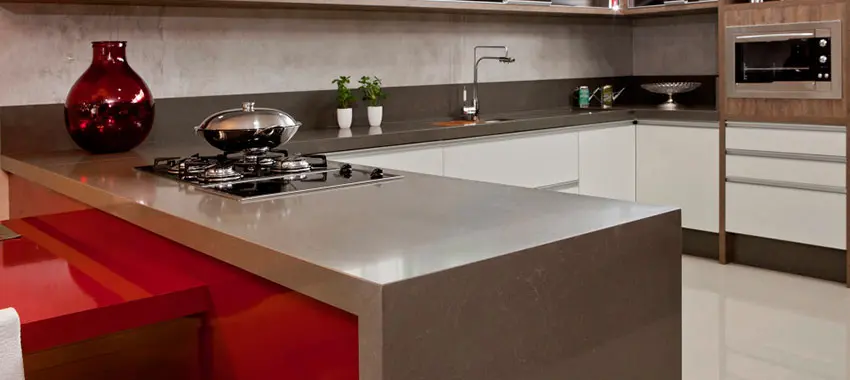
If you want to give your modern kitchen that complete look without racking your brain too much, then you can surely start with countertops. Here are some countertop options that are equal parts modern and classy, and they will never go out of style. Of course, quartz countertops are on this list.

Popular Countertops For Modern Kitchens

We’ll begin with listing popular natural stones and then discuss some excellent engineered and natural materials. Why natural stones first? They are beautiful beyond words, many of them are strong and durable, and they are definitely a sight for sore eyes. But then we also have quartz, an engineered stone, that is extremely popular in modern kitchens.

Granite

Granite is a natural stone that is inarguably one of the most popular materials out there. It is a dark-colored countertop material and it has a really beautiful, shimmery, and abstract look that is just to die for. If you love darker colored countertops and want to go for something that will last you a very long time, then granite is going to be it.

It is definitely up there with some of the most beautiful countertop materials to exist. And the best part? Once you get them installed, they will last forever, given that you maintain them well.

Marble

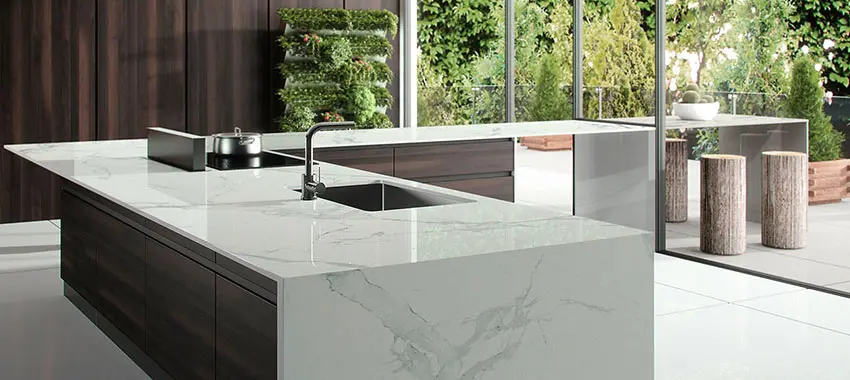
If you want to switch things up a bit and want to go for a more subtle and lighter colored countertop, then marble is going to be a very good choice. Marble is a very beautiful and light material with contrasting veining and it looks ethereal, and it also adds that modern touch that you are looking for.

Yes, marble is a bit fragile when it comes to handling and care, but if you can steer clear of these problems and take good care of the stone, then it will pay you in full with its never-ending beauty.

Soapstone

Soapstone is kind of like marble, but it also isn’t. As the name suggests, soapstone is a very soft, polished, and reflective stone that almost feels like you’re touching a bar of soap. It is very unique and so beautiful. It is light in color, so if that is something that ticks your boxes, then go for it.

Soapstone is also fragile and not the most durable, but hey, a little sacrifice is nothing when it comes to your modern kitchen. This stone has a very classic yet contemporary feel to it, so it is one of the most versatile countertop material options out there.

Quartzite

Not to be confused with quartz, quartzite is actually a natural stone, and it is very similar in looks to marble and limestone. It is a natural stone, so you have to keep in mind that it won’t be resistant to water and moisture.

You will need to seal this bad boy and this actually goes for almost all of the natural stone countertops. Once you seal them, they will not only have that beautiful polished look, but they will also be stain-free, which is really amazing and exactly what you want.

Limestone

Limestone is also another very popular stone in the kitchen and because of its color and properties, it makes for an amazing addition in your modern kitchen. As the name suggests, limestone is mainly made out of calcium carbonate, which is great and all, but what you want to take care of is not to let it come into contact with acidic or harsh chemicals.

This might cause the limestone to react with it and this can lead to damage on the surface, like the formation of holes on the countertops. Aside from that, limestone countertops are excellent in terms of durability and heat-resistance.

Wood

Some say that wood makes the kitchen look really warm and not so modern. Well, that’s not entirely true. Sure, wood is a lot warmer than other countertop materials, but if you pair it well with the rest of the décor in the kitchen, then it will be amazing in the long run.

What you want to do is go for a darker wood grain and combine different materials with it, and then see the magic happen. This will really elevate the look of wood in the best way.

Quartz

Quartz is one of the best options for countertop materials that you can go for, especially if you want variety, and something that is extremely durable, doesn’t need a lot of maintenance, and can take on any task in the kitchen like a pro.

Basically, if you want a material that doesn’t require gentle handling with kids’ gloves, then this is it. You want to go for quartz because it is literally the best one that you can get your hands on. It is going to take your kitchen and add that modern vibe to it, which is your end goal.

Stainless Steel

Speaking of modern kitchens, if you want to go for a very different and unique material, then look no further because you have a potential candidate. Stainless steel is a very beautiful and unique material in its own league. It looks industrial, it feels minimal, but it doesn’t blend in with the background. It is potent and makes its presence known.

So, if you want to go for a different material, that is something apart from your regular stones and other materials, then stainless steel is it, that is, if you don’t mind cleaning up fingerprint smudges every now and then.

Ceramic Tiles

Another very nice material selection for a modern kitchen is ceramic tiles. Tile is such a sleek and fun addition to your kitchen, and it really makes everything look so clean and modern. Maybe it’s the look of the tile in general or the orientation or patterns in which they are installed, but regardless, they are to die for.

They are also really easy to install, so if you want something that you can take on as a little project too, then this is for you. Tiles are fragile, but then again, you can get them replaced in no time and it will be amazing.

But tiles can look outdated too for some people. If you think that tiles are too old-fashion, consider porcelain slab or solid surface countertops.

Terrazzo

Think of terrazzo as a combination of different materials, all pulverized and set into resin to make a material that is unique, beautiful, and amazing for your modern kitchen. Terrazzo is made out of chips of marble, quartz, glass, and other things along the same line, and it is then molded into a slab, and you are pretty much ready to flaunt it in the kitchen.

It is durable, it is long-lasting, you have to maintain it a little more than other materials, but a win is a win.

Conclusion

A modern kitchen is a very subjective term and it is going to be different for everyone, so make sure that you keep this guide handy, because it has a lot of options for you. And for ideas, samples, and installation, get in touch with a quartz countertop contractor Potomac.
30

Apr

Why Are Quartz Countertops So Popular? Top 8 Reasons

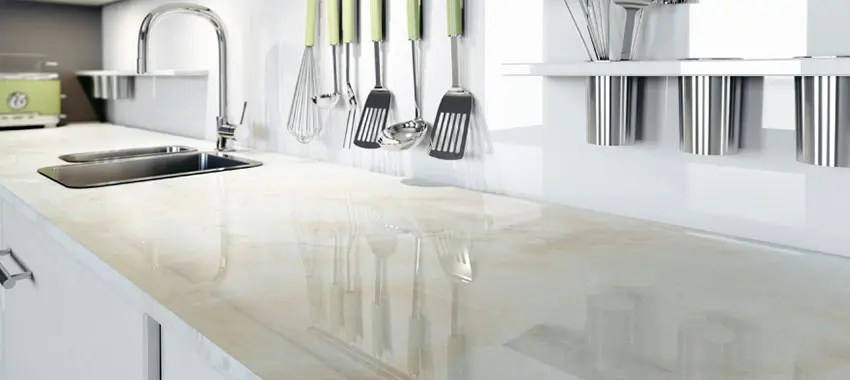
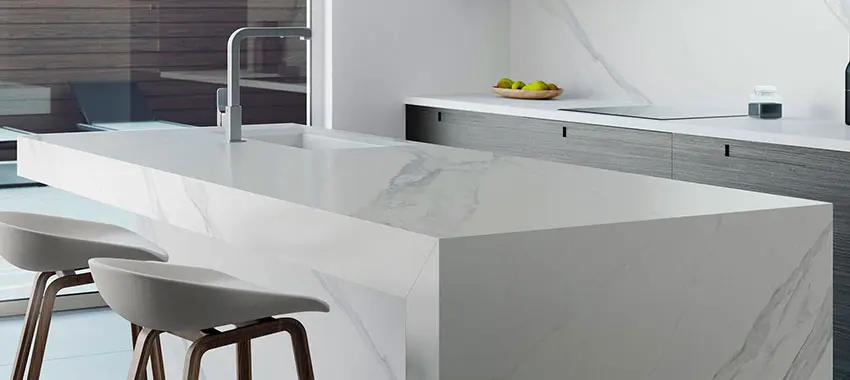
When considering countertop options, a lot of homeowners and experts alike suggest quartz countertops. So, if you’re wondering why they are so popular and if they would be the right option for your kitchen, follow this guide.

Reasons Why Quartz Countertops Are Popular

They Are Highly Durable

Quartz countertops are made with 90-95% crushed quartz crystals and resin and polymer. They are engineered stone countertops and considered one of the most durable engineered countertop options out there.

This statement holds a lot of weight when you compare the hardness of quartz countertops with other popular options, like granite and marble. Quartz countertops score 7 on Mohs hardness scale while granite scores 6-7 and marble 3-4. So, this man-made stone is equal or better in hardness (scratch-resistance and durability) than granite, a popular natural stone option.

This turns heads and makes people consider this option. But that’s not the only reason people choose quartz. There are more reasons, as well explained in this guide.

Quartz Countertops Are Non-Porous Surfaces

So, quartz is more scratch-resistant and harder than granite? So what? Well, here’s an even better reason why quartz is popular. Quartz countertops are non-porous, which means any spills won’t seep into the surface and cause stains or hygiene concerns.

As spills are inevitable in kitchens, you need a surface that doesn’t stain or appear ugly after a spill. Quartz checks this box. One that almost all natural stones can’t because natural stones, like granite, marble, soapstone, quartzite, etc., are porous and allow water to be absorbed into the surface. This is why natural stone countertops are always sealed.

So, what about other engineered surfaces? They may be non-porous as well? You may ask. The answer is: yes, most synthetic or man-made countertop surfaces are non-porous. Popular ones include solid surface, laminate, and others. But what they don’t have is the kind of durability that quartz possesses.

Therefore, in that, quartz has the best quality of natural stones (durability) without the drawback of porosity, and it also has the best quality of engineered options (non-porous surface) without the drawback of lower durability.

They Don’t Require Sealing

This ties in with the above point. As quartz countertops are non-porous, they don’t require sealing. Natural stones require sealing every year or so. And as you apply a sealer to the surface, you have to care for the slab more mindfully. Because even if you have a durable countertop, like granite, the sealer is still not as scratch-resistant or heat-resistant as the granite’s surface. So, you will have to use protection, like cutting boards, trivets, and coasters. This applies to all natural stones.

Now, you do still need to use cutting boards, trivets, and coasters for quartz countertops as well, but they are more forgiving if you seldomly chop a food item directly on the surface. However, heat resistance is a whole another issue. You must use trivets and heating pads, otherwise, the surface may get heat stains or damage.

Design Versatility

Quartz countertops are manufactured in factories. This means that their design and colors can be controlled and made in as many variations as you can think of. So, you can find all kinds of quartz colors and patterns that will match perfectly with your kitchen’s color theme and style.

Moreover, quartz countertops can be made to look like natural stones, like granite or marble. This means you can get a surface that appears like natural stone without their drawback (porosity). This is a huge win for many people.

But some people may say that laminate and solid surface countertops can also mimic natural stones, so why are quartz surfaces popular? Well, because laminate countertops use sheets that have the print of natural stone, they don’t appear very real if someone looks closely.

On the other hand, solid surface countertops are softer and lighter, so they don’t have the heaviness associated with natural stones. Not to mention that both surfaces are not as durable as most natural stones and quartz countertops.

As quartz surfaces are as hard as some of the best natural stones, they take the cake for being the most preferred choice among engineered countertops that can imitate the look of natural stones.

However, keep in mind that this is not the only benefit of quartz countertops when it comes to appearance. Quartz surfaces have come a long way and they have many color, veining, and pattern options that can’t be found in natural stones. Many people also prefer solid color quartz countertops for a modern and sleek look.

In short, they are popular because the design versatility allows homeowners to use them in any style of kitchen, be it traditional, transitional, or modern. This is why quartz countertops are all over the latest kitchen trends.

Quartz Countertops Are Low Maintenance

Quartz countertops are low-maintenance because they don’t require sealing, and cleaning them is super easy. All you need is a mild detergent and water to wipe the surface.

Moreover, due to the non-porosity, there is a lower risk of stains from spills, so you don’t need to clean them intensively to remove stains. That’s a common problem with natural stones. However, remember that quartz countertops are not very heat-resistant, so heat stains can occur if you’re not being careful and not using trivets and coasters.

When compared to engineered materials, like laminate and solid surface, all these surfaces are low maintenance and don’t need sealing. However, quartz countertops have excellent scratch-resistance and durability that laminate and solid surface don’t have.

Moreover, concrete and paper composite are durable man-made countertop options, but they do require sealing. And then there are stainless steel countertops that are also easy to clean and are durable, and are the norm in commercial kitchens, but they are not much preferred in residential kitchens.

Scratches Can Be Fixed Easily

Not all countertop surfaces allow you to fix scratches, and the process can be difficult. There are materials like laminate, butcher block, recycled glass, stainless steel, concrete, porcelain, and others that can be hard to fix when scratched.

So, easier reparability of quartz countertops is a huge benefit. You can have minor scratches buffed, and for deep scratches, you can apply epoxy fillers. However, if the scratches are real ugly, you will need a professional’s help.

The Cost Range Of Quartz Countertops

Quartz countertops are not very affordable and more expensive than options like laminate and solid surface, wood, and recycled surfaces, but they are still a good option, as quartz counters are more durable than cheaper options.

Moreover, the cost range of quartz countertops is similar to that of granite countertops, while they are actually cheaper than marble, quartzite, and many others.

They Boost Home Value

Quartz countertops are popular due to the above-mentioned reasons, so buyers perceive the property as more attractive. This increases the home’s value and helps you fetch a better price.

Downsides Of Quartz Countertops

Quartz countertops have many benefits, but they do have a few downsides you should know before buying:

  • Direct sunlight can fade the material, so they are not suggested for outdoor kitchens.
  • They are not heat-resistant. Therefore, always use trivets and heating pads.
  • High-end quartz surfaces can be expensive.

Conclusion

Quartz countertops are popular because they are durable, scratch-resistant, non-porous, low-maintenance, and have a lot of variety. If you want to know more or want to take a look at samples, get in touch with a quartz countertop contractor Potomac.
31

Mar

11 Misconceptions About Quartz Countertops

Quartz is a popular countertop option preferred for its durability and low maintenance. However, there are many things believed about quartz countertops that are not true at all. Here are some of the more ridiculous ones.

Myths About Quartz Countertops

Quartz countertops need to be sealed

For people familiar with quartz countertops, this one is outrageous because quartz is non-porous and doesn’t require sealing. This is one of the primary reasons why quartz worktops are so popular.

The myth stems from the perception that all countertop surfaces need to be sealed, which isn’t true. No man-made countertop option requires sealing, and quartz is also one of those. This makes quartz a low-maintenance option compared to natural stones, such as granite and marble, which do require regular sealing.

They are natural stone countertops

As most common countertop options are natural stones, many believe that quartz is also a natural stone, however, that’s far from the truth. The fact is that quartz countertops are made of crushed quartz crystals mixed with pigments and resin to form solid slabs. So, they are categorized as engineered stone countertops. People also call them man-made countertops.

What is natural quartz, though? Quartz is a crystalline mineral that’s found in most types of rocks. This quartz mineral is used in the manufacturing of quartz countertops. As it’s in a crystalline form, it’s crushed and then used with binders and resins.

Natural stones, on the other hand, are simply mined and then cut into slabs and fabricated.

Quartz and quartzite countertops are the same

The almost identical name of these two countertop options confuses a lot of people, and many think that they are the same. However, they are two very different countertop materials.

Quartz, in this context, is an engineered stone made with crushed quartz crystals and resins, whereas quartzite is a natural stone, a metamorphic rock formed beneath the Earth’s surface.

Quartz countertops have the characteristics of man-made materials, like they are non-porous and have a huge variety. On the other hand, quartzite countertops have natural stone properties, such as being porous and limited to their natural colors and patterns.

However, both are durable countertop options and their price range is also similar. But their installation costs differ, as quartz countertops cost less to install than quartzite.

Quartz countertops are for kitchens only

This is probably due to the fact that quartz countertops are commonly named and used in kitchens for countertop and island surfaces, so people associate them with kitchens only. But the real fact is that quartz countertops are suitable not only for kitchens, but also for bathrooms and laundry rooms, and they are suggested for home office desks, shower seats, fireplace surrounds, and many other purposes.

Quartz countertops are actually preferred in wet and moist areas like bathrooms and laundry rooms because they are non-porous, moisture-resistant, stain-resistant, and easy to clean. However, it’s better to avoid using them in areas that receive direct sunlight for most of the day. More on this in the next point.

They are not for outdoor kitchens

This one is partly true. Quartz countertops are not recommended for outdoor kitchens because they consist of resins and polymers that can discolor or warp if kept under direct sunlight for longer periods. So, quartz countertops will turn yellow or weaken outdoors. They are very much like sports cars that are excellent for highways but terrible for off-roads.

However, there are a few quartz countertop manufacturers who make UV-resistant quartz countertops that perform excellent outdoors as well. But they are not as commonly available and also cost more than regular quartz countertops. So, if you want a countertop option for your outdoor kitchen, it’s better to go with granite, concrete, stainless steel, or porcelain slab countertops.

Quartz countertops are expensive

Quartz counters can be budget-friendly or costly, depending on the quality you choose, along with the thickness and edge profile. In general, quartz countertops are mid-range countertop options with premium options available as well. Their pricing is quite similar to granite countertops, as they are also mid to high-tier countertops.

In comparison, quartz countertops usually cost less than marble, quartzite, stainless steel, and some types of wood countertops. On the other hand, they are costlier than laminate, ceramic tile, solid surface (Corian), and cheaper wood types.

Quartz countertops are high maintenance

A common misconception about quartz worktops is that they are high maintenance, but this is not true. In fact, they are one of the most low-maintenance countertop options because, unlike natural stones, they don’t require sealing and polishing. Moreover, their non-porous surface is stain-resistant, so there is a lower risk of them staining. So, caring for quartz countertops is easy. However, you do need to protect them from heat and abrasive cleaners.

They are heat-proof

Quartz countertops are fairly heat-resistant, but they are not heat-proof. In fact, they have lower heat resistance compared to natural stones like granite, marble, soapstone, and quartzite, and also other materials like stainless steel and concrete. However, they are better in heat resistance than laminate countertops.

Generally, they can withstand heat up to 150°F to 200°F (65°C to 93°C). Anything over can cause discoloration, heat stains, and cracks. So, you should always place hot pans and other items on trivets and coasters, otherwise, the surface will get damaged very quickly. Interestingly, this advice is for almost all countertop options, even natural stones that are highly heat resistant.

Quartz countertops scratch easily

This is not true because quartz slabs are scratch-resistant as they have a rating of 7 on the Mohs scale. So, they resist everyday scratches of knives and regular sharp objects. However, they are not scratch-proof. They can be scratched by abrasive tools, dragging metal objects on the surface, and also excessive use of knives can leave marks over time.

So, even though they are scratch-resistant, you should never chop food directly on the surface or they will slowly lose their appeal.

They are only available in white, gray, and light colors

Although white, gray, and light tones are popular quartz countertop colors, there is a huge variety of other colors as well you can choose. The thing is, quartz countertops are engineered stone slabs, so their color options are not limited to what nature offers. In fact, the use of polymers and resins allow manufacturers to make quartz slabs virtually in any color and pattern.

This means, apart from whites, grays, and light colors, you can also find darker colors, bright colors, and also unique ones like orange, green, and red.

Quartz countertops are only for modern kitchens

People associate quartz countertops with modern and contemporary kitchens because they add that sleekness required in those kinds of spaces. However, the wide variety of quartz countertop colors, patterns, finishes, and edging profiles allow you to choose them for any kitchen style and theme, be it traditional, transitional, modern, farmhouse, or even industrial.

Conclusion

Many of the misconceptions about quartz worktops can keep people from buying them or influence some to buy them for the wrong reasons. So, know these myths about quartz countertops before making any decision and consult a quartz countertop installer Rockville for credible information and quartz samples.

14

Mar

7 Reasons To Avoid Concrete Countertops For Indoor Kitchens

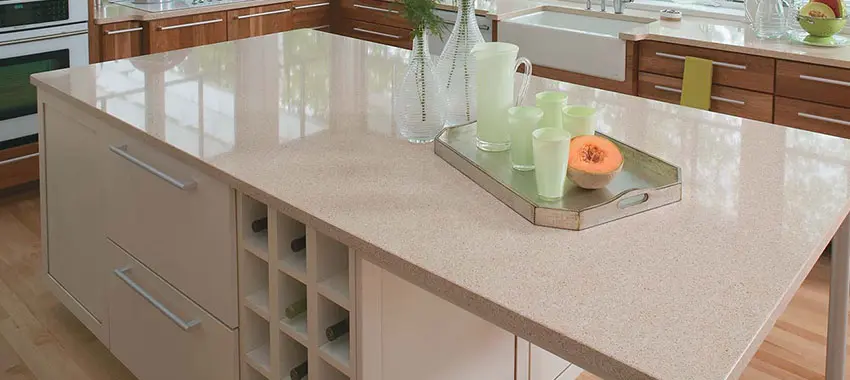
Concrete is a durable building material, so wouldn’t it make for a durable and long-lasting countertop? Many people think that. And concrete countertops are, in fact, durable and excellent for outdoor kitchens, but for indoor kitchens, they may not be the best choice, even though they offer heat-resistance and customizations. Other options like granite or quartz countertops are much better indoors for a lot of reasons. Let’s know why.

Downsides of Concrete Countertops For Indoor Kitchens

Need To Be Sealed Frequently

Concrete countertops are porous, which means they can absorb liquids and spills. This creates multiple problems. A porous surface doesn’t only make cleaning difficult, but it also leads to stains in the long run because even when you clean the surface, some of the liquid will seep into the countertop, causing ugly stains.

This is why concrete countertops need to be sealed frequently, once every 1-2 years. If you have a busy kitchen, you may have to reseal concrete countertops every year. It’s critical to be cautious because sealers don’t have any color, so you wouldn’t clearly know when the sealer is breaking down. Therefore, you would want to seal it regularly to avoid stains and damage. But remember that granite and any natural stone countertop also require sealing.

The Heat-Resistance Is Of No Use

Let us explain why one of the best things about concrete countertops, heat resistance, is of no use. Concrete countertops are highly heat-resistant. However, they are porous and you always need the surface to be sealed. Now, the sealers you apply to concrete countertops aren’t heat-resistant, even though concrete is.

So, if you put hot pans or any other hot item on the concrete surface, it will break down the sealer. And you know what follows after that. Any spills will stain the surface and you don’t want that. Therefore, you will need to use trivets and coasters for concrete countertops to ensure the longevity of the sealer applied to the surface.

So, the heat resistance of concrete countertops is an attractive benefit for outdoor kitchens because you need a material to withstand direct sunlight or extreme temperatures without cracking, but it’s not as much for indoor kitchens.

But to be fair, heat resistance isn’t quite helpful whichever countertop material you choose. Even if you have quartz, granite, or any other countertop surface, it’s never recommended to put hot pans directly on the surface.

Hairline Cracks Are A Norm

Concrete is different from natural and engineered stones. As the concrete dries during curing, it shrinks a bit, which leads to hairline cracks on the surface. These cracks are not a durability concern and are considered a natural part of concrete finishing, but they affect the aesthetics, especially in indoor kitchens.

These hairline cracks are visible, though not too bad if you’re going for a rustic or industrial look. But if you need a surface that appears modern and sleek, these hairline cracks may be a problem.

Why is it not an issue for outdoor kitchens? Usually, outdoor kitchens are made of concrete blocks or stones and have stainless steel appliances, which makes for a rugged look, so hairline cracks of concrete countertops don’t look out of place.

Brittle Compared To Granite And Quartz Countertops

Concrete countertops have excellent compressive strength. You can place a huge amount of weight on them. But when it comes to tensile strength, it is a weak material. If hit by some force, they can crack much easily than granite or quartz countertops. So, concrete countertops are especially not recommended for kitchen islands and peninsulas with overhangs.

But why is that? In the case of these three materials, their tensile strength is roughly 10% of their compressive strength. Both granite and quartz have way higher compressive strength than concrete, so their tensile strength is higher as well.

Why is it not a concern outdoors? Because other benefits of concrete countertops for outdoor kitchens outweigh this drawback. For indoor kitchens, you have better options like quartz countertops, so this disadvantage of concrete counters sticks out.

You May Need Cabinet Reinforcement

Concrete countertops are heavier than granite or quartz countertops of standard thicknesses (2mm to 3mm), so you’ll most likely need to reinforce your kitchen cabinets to ensure that they have the load-bearing capacity for concrete slabs without sagging. So, the installation may cost even more due to the added requirement.

Why is this not an issue for outdoor kitchens? Outdoor kitchens are made to be sturdy and durable to withstand the outdoor elements. The cabinets are commonly made of stainless steel, marine grade aluminum, concrete, or HDPE (high-density polyethylene), which don’t need anything extra for concrete countertop installation. However, if the cabinets of your outdoor kitchen are made of wood or PVC, they will require reinforcement.

Not DIY-Friendly

Many people pitch concrete countertops as DIY-friendly and it’s understandable why they are perceived as that. You just need basic tools and have to mix and pour concrete into forms, finish, and wait for it to cure. Simple, right? Well, not so much.

Although pouring concrete countertops yourself can save you a significant amount of money, it’s not recommended unless you have prior skills dealing with concrete.

Firstly, there are many types of concrete and mixing concrete requires special skills, else the concrete would not be durable enough, even when you pour and finish it correctly. Now, you can avoid this whole problem by simply ordering ready-mixed concrete. But that’s still not it.

Even when you have an excellent concrete mix at your disposal, you still have to build molds, pour concrete, and finish and cure it. Any misstep in this will lead to an uneven surface, cracks, and durability issues. Plus, DIYing also rules out complex shapes and designs.

Therefore, to ensure durability and longevity, you will need professionals for pouring and installing concrete countertops.

Installation Is More Time-Consuming

Installing concrete countertops usually requires more time than natural stone or engineered stone options. This means you won’t be able to use your kitchen for a longer time. Let’s compare how much time a few options take:

Granite, Quartz, And Other Stone Countertops

Popular stone countertops like granite and quartz are quicker to install because the slabs are usually already there. After the measurements, the fabrication process begins, which can take from 3 to 14 days, depending on the stone. For instance, quartz fabrication takes 3-10 days while granite fabrication may take up to 14 days.

After fabrication, the installation is usually done within a few hours and the countertops are ready to use right after the installation. The entire process takes 1 to 2 weeks.

Precast Concrete Countertops

Precast concrete countertops are made according to the requirements in a workshop. This takes from 1 to 2 weeks. The fabricated concrete slabs are then installed in the kitchen. You can use the concrete surface about one week after the installation. The whole process takes 2 to 4 weeks.

Precast concrete countertops are preferred because they comparatively take less time to install than cast-in-place concrete countertops and there is less mess in the kitchen as well.

Cast-In-Place Concrete Countertops

They are poured on-site, in the kitchen, so you have more customization options and the slabs are seamless. However, they are more time-consuming to install than other options. Concrete is poured on the cabinets, which requires days to cure. After curing, drying and polishing needs further time. The entire process takes 3 to 4 weeks.

Why is this not an issue for outdoor kitchens? Because outdoor kitchens are not primary kitchens, you won’t mind the countertop installation taking more time. However, for indoor kitchens, you want the installation to be quick.

Conclusion

Concrete countertops are durable and heat-resistant and have many other benefits, but the above-mentioned points emphasize why they aren’t great for indoor kitchens. If you want a countertop option that offers durability, heat-resistance, low maintenance, and faster installation for your indoor kitchen, consider quartz countertops by consulting a quartz countertop contractor Potomac.
28

Feb

Quartz Vs. Laminate Countertops: Durability Vs. Affordability

If you’re considering engineered countertop materials for your kitchen, two popular options are quartz and laminate countertops. But which option is better? Let’s compare laminate and quartz countertops.

Differences Between Quartz And Laminate Countertops

Composition

Let’s first know what these materials are made of before going on and comparing their traits and costs.

Quartz Countertops

Quartz is made of 90-95% of crushed stone crystals like quartz and marble fused with resin and added pigments to create a stone surface. It’s a popular kitchen countertop material, and a very durable one. There are various qualities of it determined by the percentage of crushed stone in it. High-quality quartz countertops have a higher percentage of crushed stone particles.

Laminate Countertops

They are basically a core layer of particleboard or MDF (medium-density fiberboard), that has a decorative laminate layer on top of it. It’s a printed layer, so it can look like anything imaginable and printable. So, it can look like wood and natural stones as well. At the very top of this is a protective layer that offers moderate protection against moisture.

Appearance, Colors, And Variety

Quartz Countertops

It’s an engineered stone, so its appearance is genuinely exactly like a stone, far superior to laminate. Moreover, because of the use of resins, polymers, and pigments, you can find a huge variety of quartz colors and patterns.

There are many quartz slabs that appear like granite, marble, and any other natural stone, and they look like genuine natural stone because quartz actually is a stone, albeit engineered. That being said, quartz has its own appeal too. Its solid colors are preferred in modern kitchens for a sleek appearance.

In addition to that, quartz can also be made to look like wood, but that is not too convincing and not quite popular, as the surface may appear stone-like instead of wood-like. If someone wants a wood-like appearance, they prefer other options such as laminate.

Laminate Countertops

Laminate surfaces can mimic the appearance of anything possible, be it natural stones, wood, bamboo, or anything else. Newer laminate slabs use 3D printing so the print appears quite real, though you can spot the difference if you look closely.

Moreover, even if you don’t want the look of popular materials (natural stones, wood, etc.), there is a huge variety of colors and designs you can pick from.

Durability And Longevity

Quartz Countertops

Quartz is highly durable and long-lasting. It actually rivals granite, a popular natural stone, in overall durability, though some traits of quartz are better while some characteristics of granite win.

In comparison to laminate, quartz is miles ahead of it in durability. It can last from 25 to 50 years if maintained well.

Laminate Countertops

Laminate countertops are moderately durable and last from 10 to 20 years. That is because the top-most layer can wear over time, which leads to damage.

Scratch-Resistance

Quartz Countertops

Quartz counters are excellent when it comes to scratch-resistance. On the Mohs scale, which detects the hardness and scratch-resistance of a material, it scores 7. For comparison, granite has 6-7 score and diamond has a 10 score.

Now, even though quartz countertops are scratch-resistant, it’s still not suggested to chop food directly on the surface. Always use cutting boards to keep the quartz surface in good shape.

If you’re wondering what’s the use of this good scratch-resistance of quartz, then? The answer is that this trait will be helpful in preventing unintentional scratches, like putting keys on the surface, putting knives on the surface or occasionally using a knife directly on the worktop, etc.

Laminate Countertops

Laminate countertops have a protective layer on top, but it can get scratched over time. So, if you have a laminate counter, you must use a cutting board, otherwise, the surface will look ugly very quickly. You can fix minor scratches, but major problems can’t be repaired.

Water-Resistance

Quartz Countertops

Quartz surfaces are manufactured to be waterproof. So, you can wipe any spills without worrying about them seeping into the surface, causing stains and damage. Plus, quartz is non-porous, unlike natural stones, so you don’t need to seal it to retain its waterproofness.

Laminate Countertops

Laminate countertops have a protective layer that is waterproof. However, the surface can be vulnerable to moisture around the edges. Therefore, try to avoid and limit spills, and use minimal water when cleaning.

Heat-Resistance

Quartz Countertops

Quartz is an engineered stone, but it’s still composed of a small percentage of resin. So, prolonged exposure to heat can stain the surface. Usually, it’s safer to put anything with temperatures around 150°F to 300°F, but you should never risk it and always use hot pads, trivets, or coasters for hot pans.

Laminate Countertops

Laminate counters have a plastic decorative layer, so it’s inferior in heat-resistance compared to quartz. It can be blistered or stained even with a short-term exposure to high heat. The top-most layer can even delaminate or warp. So, be careful and make it a habit to put pots and other hot items on hot pads, trivets, or coasters.

Maintenance And Repair

Quartz Countertops

Cleaning and wiping quartz countertops is easy and stress-free. You only need to make sure you’re using the right cleaner and avoiding abrasive tools. As the surface is scratch-resistant, you won’t be dealing with too many scratches. And another great thing is that quartz countertops don’t need sealing.

When it comes to repairs, it’s a stone (though engineered), so you can have it professionally repaired in case of scratches, chips, and stains.

Laminate Countertops

Laminate countertops are also easy to clean, but you have to be careful and never expose them to a lot of moisture because they can be damaged by it. And avoid abrasive chemicals and tools too.

Moreover, preventing scratches is really important because scratches can expose the core layer of laminate countertops, leading to premature damage. Even if scratches and moisture don’t damage the core layer, the top-most layer will look bad. On top of it all, severely worn or damaged laminate countertops can’t be repaired, so you will need to replace them in case of damage.

For Outdoor Kitchens?

Both surfaces are not recommended for outdoor kitchens as the resin in quartz and the plastic layer of laminate can wear quickly when exposed to outdoor elements. Use granite, concrete, or stainless-steel countertops instead.

Cost

Quartz Countertops

Quartz slabs are more expensive than laminate. However, there are various qualities of quartz, so if you’re dead set on buying quartz but want something low-cost, you can pick a lower-quality quartz slab or prefabricated quartz countertops.

Laminate Countertops

Laminate countertops are cheaper than quartz. So, if you’re tight on budget and need a moderately durable surface that can last for 10-15 years, then laminate is a good option.

Installation

Quartz Countertops

Quartz should be installed by a fabricator because it requires special tools and skills. DIY installation could lead to improper installation or damage to the slab.

Laminate Countertops

Many types of laminate countertops are DIY-friendly so you can install them yourself and save labor costs.

Final Verdict

Both quartz and laminate countertops have their pros and cons, and cater to various buyers. If you need a beautiful and highly durable material, pick quartz countertops. On the other hand, if you need something budget-friendly that is also good to look at and moderately durable, then choose laminate countertops.

Consult a quartz countertop contractor Potomac to know more about different countertop options and which of them suits your budget and preferences.

13

Dec

Engineered Stone Vs. Natural Stone Countertops

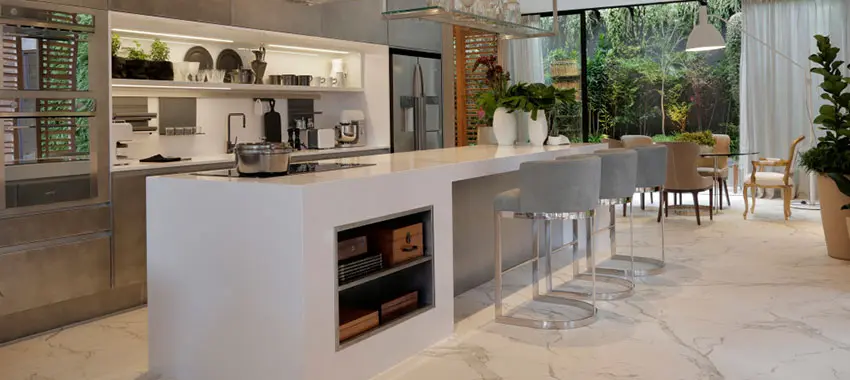
There are many countertop materials to choose from, but they’re divided into two major categories. They’re either naturally sourced or they’re engineered for reinforced strength and durability. Popular natural stones are marble and granite while common engineered stone countertops are solid surface and quartz countertops. Here is everything you need to know about the two different types of countertop stones.

Differences Between Engineered Stone And Natural Stone Countertops

The Material

First and foremost, you need to know what natural stone and engineered stone are.

Natural Stone Countertops

As the name suggests, natural stones are, well, naturally obtained. They’re made by nature and in nature. Some are naturally made by incorporating molten rocks, mica, and other materials fused together at high temperature and pressure, whereas others are made inside mountains, underground, and even in water.

Natural stones are made through natural processes and they have different compositions. They include granite, marble, quartzite, sandstone, limestone, travertine, onyx, soapstone, and many more options. These natural stones have different properties, different looks, different ranges of durability, and they’re just overall amazing.

Engineered Stone Countertops

When it comes to engineered stones, you have to understand that they are man-made materials. If you see the suffix, engineered with any stone or even material, then you can automatically assume that it is man-made and it’s either treated with a mix of natural and synthetic materials or made solely of synthetic materials.

There are many engineered materials out there, but we talk specifically about engineered stone surfaces, they are: quartz, solid surface, porcelain, and sintered stone. Porcelain is not exactly a stone because it’s made of clay, but it’s still categorized in engineered stones.

Now, quartz is a popular one. It’s made by pulverizing rocks and making them into stones with the help of strong binding agents and adhesives. Just like natural stones, the durability, heat resistance, and other properties differ from stone to stone.

Durability

The next thing you can compare between natural stone as well as engineered stone is the durability. You want to select a stone surface that is amazing in quality as well as durable.

Natural Stone Countertops

Most of the natural stones are amazing in durability. You don’t need a lot of convincing when it comes to natural stones, because they are stones that are literally made under high pressure and temperature. They are not made to crack.

Natural stones have a lot of strength and most stones outlive everything else, given that they’re maintained and taken care of. Granite and quartzite are two of the most durable natural stones followed by soapstone, slate, marble, and others.

Engineered Stone Countertops

Engineered stone surfaces are also strong. They’re really amazing when it comes to durability, because they are literally treated to make them stronger and enable them to endure various elements. Quartz, for instance, is an amazing material with outstanding durability even though it lacks a bit in heat resistance due to resin in its composition. However, in strength and durability, it rivals granite. Then, there are sintered stone countertops that are both durable and heat resistant.

Maintenance

Next up is the maintenance. Every stone in this world, whether it be natural or engineered, needs to be maintained. That is just how things go. You need to clean them, seal them, and keep things away that can damage them.

Natural Stone Countertops

When it comes to natural stones, you are usually high maintenance. You can’t just make do with cleaning. You also have to seal these babies because natural stones are porous. That is just something that comes with the properties of natural stones.

They have small holes on the surface that can suck in water and moisture and if you don’t seal your natural stone countertops, then they can cause stains on the surface, which isn’t good at all. If you want a natural stone that doesn’t require sealing, choose soapstone or consider engineered stone surfaces.

Engineered Stone Countertops

Since engineered stone countertops are man-made, their properties can pretty much be controlled. So, it is a very good thing to know that engineered stones like quartz, solid surface, and sintered stone are non-porous.

They don’t have the tendency to suck in moisture present on the surface. So, you can totally get away without sealing these materials. You just need to give these materials a good wipe down and you’ll be good to go.

Variety

People love options. They love to have a list of colors and designs to choose from. Some might think that it adds to the confusion, but it is what it is.

Natural Stone Countertops

There are lots of options in natural stone countertops depending on the materials but the options are not as much as in engineered stone surfaces. Why? Because natural stones are, well, naturally made, so the colors in which natural stones are available are default colors and there is only a slight chance of ever having exotic colors and those unique colors usually cost much more.

In short, when it comes to customized designs and colors in natural stones, you have to put a lid on your choices. You can only choose from what is available. This is good for most people, but some just don’t vibe well with it.

Engineered Stone Countertops

Engineered stone options regarding colors and designs and even patterns are literally endless. You can get almost any color, design, and pattern your heart desires. Since they are man-made, the choices are in the hands of the manufacturer.

There are just as many colors in engineered stones as you can think of and you can even customize them to your liking. This is something that a lot of people love.

Cost

The cost is also something that a lot of people want to know about. You want to invest in a good stone, no doubt, but you don’t want to spend a fortune on them.

When it comes to natural stones, they can run a bit more expensive than man-made materials. However, even engineered stones can be pricier than regular man-made materials. The reason is that engineered stones are treated and reinforced with more strength and properties that make them as hard as rocks and more durable. Anyway, in both types, cost depends hugely on the quality of the stone.

Resistance To Heat & Water

Lastly, you might also want to know about the resistance to heat and scratches and it’s quite interesting.

Natural Stone Countertops

Natural stones are great when it comes to heat resistance. For instance, granite, quartzite, and soapstone can resist temperatures up to 450–500°F, whereas, marble and travertine can only withstand up to 250–300°F.

In the scratch resistance category, there are some natural stones that don’t do so well like soapstone, onyx, and marble. However, there are some that are excellently scratch-resistant like granite, quartzite, basalt, and sandstone.

Engineered Stone Countertops

Engineered stones are great when it comes to scratch resistance, but not so much when it comes to heat. These stones can get blistered by heat really easily such as quartz (withstands temperatures up to 300–350°F).

The main reason why it happens is that these stones have resin in them and they are not able to resist heat, which is why the surface of these stones can get darkened after you put very hot pots and pans on the surface. So, you need to be careful when it comes to both of these stones.

However, there are sintered stone and porcelain slabs that are both excellent in heat and scratch resistance.

Conclusion

Engineered and natural stones both have their own sets of pros and cons. Well, now you know exactly which one to choose in case you’re replacing your kitchen countertops. If you want to take a look at various engineered and natural stone options, consult a quartz countertop contractor Potomac.
16

Nov

16 FAQs About Choosing Quartz Countertops Thickness

So, you’re choosing quartz countertops for your kitchen but haven’t really decided on the details like the color and pattern, the finish, the size, the thickness, and others? Well, this guide is all about choosing the thickness of quartz countertops, as we will answer the most frequently asked questions on the topic. Let’s begin!

Most-Asked Questions About Selecting Quartz Countertops Thickness

What is the standard thickness of quartz countertops?

The standard thickness of quartz countertops is 2 cm (3/4 inch) and 3 cm (1 1/4 inches). Quartz slabs 3 cm thick are common in kitchens, while 2 cm is often used for prefabricated slabs and bathroom countertops.

Is thicker quartz more expensive?

Yes, thicker slabs are costlier, whichever material you choose. Apart from the material’s cost, the installation cost may be higher as well for thicker quartz slabs as they are heavier and may require special tools and techniques for installation. Usually, 3 cm quartz slabs are considered thicker slabs and are commonly used in kitchens.

Is it better to have thick or thin countertops?

Short answers: For kitchens, a thick countertop (3 cm and over) is better than a thin (2 cm and below) countertop if your budget allows, as it’s more durable and won’t crack easily. For bathrooms, the same is true, but 2 cm slabs are considered thick, while anything lower than that is taken as thin.

Long answer: Thick quartz countertops are preferred for their higher durability and aesthetics, but they are usually costlier and heavier. They may require you to consider additional support for the cabinets. Moreover, thicker quartz slabs are good at noise reduction and enable you to entertain more customization options like detailed edging profiles, various sink designs, and other functional and stylistic improvements.

Thin quartz countertops are favored by people who want a cost-effective countertop installation and need a minimal and modern appearance. The installation is easier as you don’t need reinforcements for cabinets and the slabs are eco-friendly because they have a smaller carbon footprint.

However, the durability of quartz countertops reduces as you go for thinner slabs. So, 2 cm slabs are less durable than 3 cm slabs, while 1 cm slabs are less durable than 2 cm slabs, keeping the quartz quality constant. Moreover, thinner slabs may look cheaper at a glance and there are fewer customizations for thinner quartz slabs.

Is 2cm or 3cm quartz better?

For kitchen countertops, 2cm and 3cm are common thickness options for quartz slabs. 3cm is more durable, a standard for kitchen countertops, and offers more customization options and styles. On the other hand, 2cm slabs are more cost-effective, still fairly durable, and lighter. If budget is not an issue, 3cm quartz is always the better choice. However, if you want a cost-effective option, choose 2cm quartz slabs and use plywood support under the slabs.

For backsplashes and bathroom countertops, 2cm is a standard and you can choose it without worrying about durability issues.

What is the price difference between 2cm and 3cm quartz?

The price difference between 2cm and 3cm quartz is usually 20-30%, given that the quartz quality is the same. However, the standard for kitchens is 3cm slabs, but if you have a tight budget, you can choose 2cm slabs along with professional installation.

Can you make a thin countertop slab look thicker?

Yes, you can make a thin countertop slab appear thicker by choosing the right edging profile, like mitered, laminated, waterfall, and others. With these edging options, you can make a 2cm quartz slab look like 3cm or 4cm.

How to choose the thickness of your quartz countertop?

Firstly, you should know about common thicknesses for quartz countertops, which are 3cm and 2cm. The former is more durable and the latter is a bit less durable. Secondly, consider the budget as thicker slabs are obviously pricier than thinner slabs. You should also take some time to choose an edging profile, as there are many options and some can also create an illusion of a thicker countertop slab.

Moreover, consider the style of your kitchen because 2cm slabs work well with modern and minimalist kitchens, while 3cm quartz slabs are for traditional and luxury kitchens. On than that, choose a thickness by keeping in mind your usage because busy, high-traffic kitchens are better off with 3cm slabs.

Do 2cm quartz slabs need plywood support?

Yes, you need to install a plywood support underneath the quartz slab and then install the slab. This adds support, allows for overhangs, and reduces the risk of the slab cracking during installation or due to a sudden impact.

Are thin countertops in style?

Yes, thin countertops are commonly used in modern and contemporary kitchens as they add a sense of sophistication and sleekness. However, 2cm slabs are usually considered thin, whereas the standard for traditional and high-end kitchens is 3cm.

Do thicker quartz countertops boost the home value?

Thicker quartz countertops (3cm and over) are considered high-quality and durable, so they can have a positive impact on the home’s value if all other factors favor it, such as the quality of quartz, your home’s design and aesthetics, the countertop thickness standard in your neighborhood, and the condition of the countertops.

If the quartz quality is mediocre, the home’s design doesn’t complement a thicker slab, thinner counters are favored in your neighborhood, or the countertops are faded, then a thicker slab won’t be of any help.

How thick is 2cm quartz?

A 2cm quartz slab is 3/4 inch or 20mm. It’s considered a thin quartz slab best for bathroom vanities, vertical installations, and budget-friendly kitchen countertops.

A thicker low-quality quartz slab vs. a thinner high-quality quartz?

When comparing a 3cm low-quality quartz slab with a 2cm high-quality quartz slab, quality matters more than thickness. Therefore, a 2cm high-quality quartz slab would be a better option in terms of durability and longevity. Keep in mind that if the quality is the same, a thicker slab is better than a thinner slab.

How far can a 2cm quartz overhang?

Unsupported overhang of a 2cm quartz countertop can be 6-8 inches. However, if you add support every 24-30 inches, you can extend the overhang to 12 inches. Without proper planning, longer overhangs can crack, so have an expert install the countertop.

Can you mix countertop thicknesses?

Yes, you can use two different thicknesses for countertops in the same kitchen. You can do so by picking a thicker slab for the island while using a thinner slab for the countertops. This can help you create a focal point in the kitchen or a stylistic statement and also help you save money.

How thick should a quartz kitchen island surface be?

Your quartz kitchen island surface should be 3cm for durability and aesthetics. However, you can get away with a 2cm surface if you use high-quality quartz and install plywood under the quartz slab.

Is 1.5cm quartz too thin?

For kitchen countertops, 1.5cm quartz is too thin. The standard thickness for quartz and natural stones is 3cm, however, you can go with 2cm as well. On the other hand, you can use 1.5cm for bathroom vanities or vertical applications such as backsplashes.

Conclusion

The durability of your quartz countertop depends on the quality and the thickness of the slab. So, choose thickness carefully. Get in touch with a quartz countertop contractor Rockville for advice and countertop installation.

29

Oct

Grades Of Quartz Countertops & How To Examine A Quartz Sample

Quartz is a man-made countertop material and it’s one of the strongest available, offering excellent longevity and strength. However, when buying quartz kitchen countertops, you should learn about different grades of quartz and how to spot a fake or low-quality quartz slab. Here’s a guide.

Different Grades Of Quartz Countertops

Quartz countertops mainly have three grades. Let’s go through them one by one.

First-Choice Quartz

First-choice quartz is also known as high-grade quartz and it is the best grade of quartz out there, albeit very expensive at that. This grade has a very striking color that makes it look high-quality and it has the perfect thickness for kitchen slabs. The material concentration is definitely higher in first-grade quartz, making it heavier and sturdier, however, it also means that it will be a pain to install.

First-grade quartz is also highly scratch-resistant, so you don’t need to keep your knives at bay, because this can take on everything. But it’s not suggested to cut food directly on the surface without a trivet or coaster.

Second-Choice Quartz

This is the perfect middle material to choose from, if you don’t want to go for too expensive or too cheap quartz slabs. Also known as mid-grade quartz, second-choice quartz is stronger than its low-quality counterpart.

Unsurprisingly, it is popular among homeowners, because it’s really affordable, it comes in a lot of colors, and it’s fairly durable. But is it the most durable quartz quality on the planet? No. But that doesn’t mean you can’t get it for yourself. It will last a decent time in the kitchen.

Third-Choice Quartz

Also known as low-grade quartz, this material has more resin than quartz and minerals. This makes the material lightweight and affordable, but it is definitely not as long-lasting or durable as the above two grades.

However, you can still install it in your kitchen. You just need to be really careful that you’re not letting any hot things near it, because the resin will blister and it will lead to heat stains on the countertops, which is not what you want.

How To Check A Quartz Sample?

So now that you know the different grades of quartz countertops, you should learn how to check the quality of quartz as you can’t carry out extreme quartz durability tests. Here is what to look for when examining a quartz sample:

Check The Slab Thickness

The first thing you want to take note of is the slab thickness. Even though quartz comes in a lot of slab sizes, you still want to keep your eyes peeled for any sketchy signs.

So, when you’re looking at a slab, you first want to ensure that it obviously matches your dimensions, but if you want to see whether you’re getting a good quality quartz or not, then you have to check its thickness. The thickness should be uniform from any side. So, check the thickness from the middle and the edges and sides to see if there are variations. If there are, you’re looking at a low-quality quartz slab.

Moreover, the slab should be at least 2cm in thickness. Lesser thickness than that doesn’t necessarily mean the quartz slab is low-quality, but even first-choice quartz would be fragile at a thickness less than 2cm.

The Color Of The Slab

The next thing you want to consider is the color of the quartz slab. By now, you know that good quality quartz has a very potent color too. You don’t want to go for too white slabs because they look fake and may be of bad quality.

You also want to check whether the color and pattern is consistent throughout the slab. If you see any inconsistencies in the slab’s color or random yellow or black spots or pinholes, then you may want to stay away from that because it may be faux quartz or low-quality quartz.

Resin To Mineral Ratio

The next thing you want to check is the resin to mineral ratio. Even though quartz is primarily made out of resin and pulverized minerals, you still have to check how that ratio is running throughout the slab.

Firstly, you want to check if the slab is too yellow or not. If it is too yellow and very hard and brittle, then it has more resin than mineral in it. If it’s the other way around, then it is a good quality material. For reference, quartz slabs are usually 90-95% quartz and other minerals, and 5-10% resin.

The Price Tells A Lot

Quartz countertops, even though they’re man-made, can still run a little expensive, especially if they’re good quality. These countertops are nowhere near considered cheap by any means.

So, if you’re going for a good quality quartz countertop and you want to ensure that you’re not getting duped, then you have to buy it at full price. It might not be something you want to hear, but in the case of quartz, you’re paying for the quality you get. So, even though you might want to go the other way, it won’t be beneficial.

Weight Of The Quartz Slab

Quartz is also quite heavy. It is not a lightweight material by any means. If you pick up a sample of the quartz slab and try to get a feel of the weight, and if it feels slightly heavy, then you’re getting a good quality one. It means that it has the right ratio of mineral and resin.

If the quartz has too much resin in it or if it’s made out of non-quartz materials, then it will be lightweight. So, this is something that you have to keep in mind.

Is The Surface Smooth Or Gritty?

For this, you might need a magnifying glass, or you need to have a really good sense of detail. You want to check the grittiness of quartz. It is something that will save you from getting duped. Sometimes, people will make glass look like quartz and if that is the case, then the surface, especially where the veining is, will be very smooth.

Real, good-quality quartz, on the other hand, will be gritty with a texture. You can easily figure it out with a magnifying glass or by running your fingers over the material. It is a great way to figure out which is the real deal.

Where Is The Slab From?

You want to know the origin of the slab and this doesn’t just mean checking the label, which says where it’s made. These can be pretty misleading and, in all honesty, how hard is it to slap a label on something? So, if you want to ensure that you’re getting good quality quartz, then try to source your material from retailers that are known to source materials from countries that export quartz. This is also a really good tip for natural stone countertops.

Even though quartz is man-made, some countries specialize in manufacturing them. Top countries that export quartz are China, India, USA, Turkey, Brazil, and Norway.

Conclusion

Quartz grades may seem like they are insignificant, but you’ll only know the difference when you get your hands on the good quality stuff. Hire a reputable quartz countertop installer Rockville who can help you navigate through the entire quartz countertop installation process from choosing the quartz quality to the installation.

18

Sep

Should I Choose Dolomite Or Quartz Countertops?

There are many countertop options out there. If you’re wondering what are the differences between dolomite and quartz countertops, then here is a comparison between them. You’ll figure out which one you like the most.

Dolomite Vs. Quartz Countertops

The Material

Dolomite Countertops

Dolomite is a sedimentary rock and it is mainly composed of, well, dolomite. Dolomite is magnesium carbonate, but it has a high water content. This rock is usually found near water aquifers or groundwater bodies below the Earth’s surface and they have a very high water concentration.

From the looks of it, dolomite is really similar to a hybrid of granite and marble. It’s kind of like a dark marble with veining, but it is beautiful nonetheless. It is an amazing option to go for if you are looking for something that won’t look too harsh, but still natural and can sate your inner natural stone lover. Dolomite will impress you to no end and that is amazing.

Quartz Countertops

Quartz is a man-made stone. It is mainly composed of pulverized rocks and minerals, and they are all bound together by resin, which gives the countertop that glossy but super-hard finish.

Quartz is an amazing material because it has a striking similarity to marble, but it is not as fragile as marble. It is going to last you a very long time and it is going to be a winner in the kitchen, so you know that the material you chose is going to be good.

Durability

If you’re going to go through the trouble of getting a countertop material for your kitchen, then the least you can do is ensure that it is a strong cookie that will not get damaged if you breathe too loudly in front of it.

Dolomite Countertops

Dolomite is not the hardest material on the block, but it is definitely a lot more harder than marble and other very fragile natural stones. Since this is also a natural stone, you can notice an innate strength in the stone and that is what makes this material so much better than those really fragile and very prone to damage materials. So, if you want something decently durable, then dolomite is the way to go.

Quartz Countertops

Quartz is also an amazing material when it comes to durability. Since it is a man-made material, the manufacturer has free rein to make it as hard as the customer wants. This just means that they will put more stone and resin in the mixture and they will treat it under high pressure to turn the mushy substance into a solid rock that can scratch any surface.

So, quartz is definitely up there in durability, even more than most natural stones, which is saying a lot.

Cost

Both dolomite and quartz are very reasonable materials, but when you compare the two, dolomite wins this round, because it is more reasonable. Quartz can run a bit more expensive, but the things is that the cost of quartz counters is variable and it changes a bit with the quality and brand you choose.

So, if you’re concerned about the price, then now you know which one can fit your budget more seamlessly, without leaving your wallet empty and sad. So, take your pick wisely.

Heat & Scratch Resistance

This is also something that you want to consider when you’re looking for countertop options. They have to be strong enough to deal with scratches and stains.

Dolomite Countertops

When it comes to dolomite, it might be lacking in both. See, dolomite is a natural stone, which means that it has open pores on the surface. These pores, although they may seem harmless, can have really lasting effects when it comes to stains.

They will suck in water or moisture and you’ll be left with a mottled surface that has stains everywhere you look. Also, dolomite doesn’t scratch easily, but that is not to say that it doesn’t get scratched at all.

Quartz Countertops

Quartz is a material that is literally a stone, quality-wise. When you look at quartz, you can tell that it is a densely packed material with no pores on the surface at all. So, you can say goodbye to water damage forever.

As for scratches, since quartz is quite hard, it’s going to take a lot for it to get scratched, but you still want to play it safe. Just because something can endure scratches doesn’t mean that you should test its limits.

Water Resistance

Water resistance is also an important factor to consider, because you’re literally concerned with the kitchen here. There is going to be a lot of water usage, exposure, and contact. This is not something that you want to take lightly.

Dolomite Countertops

As far as dolomite is concerned, it can be made waterproof if you seal it. Think of sealant as a clear coat that is applied to the dolomite countertops to fill the exposed pores.

This dries to a rock-hard finish and then even if you leave water on the surface, it won’t get sucked into the rocky vortex. It will bead up on the surface, giving you plenty of time to wipe it all off.

Quartz Countertops

Quartz is waterproof so what you will get after sealing dolomite is something that is an innate quality of quartz, which is amazing. This means that you don’t need to go the extra mile and apply a sealant. This is something that really cuts down the maintenance and it is just amazing if a material can hold its own in the kitchen.

Maintenance

When you get a countertop material for your kitchen, you have to commit to maintaining it. It is not something that you can just set and forget. This is why you want to choose a material that is easy to maintain and won’t give you a headache in the long run.

Dolomite Countertops

Dolomite, being a natural stone, is going to be demanding when it comes to maintaining it. It is just something that comes with the baggage of natural stones. You have to seal them so that water doesn’t ruin them. You have to clean it, but then you have to let the countertops get fully dry too, because wet countertops are a no-go.

You also sometimes need specialty cleaners to clean and get rid of stains on the surface of dolomite because regular detergent can do more bad than good for the countertops. So, this is a lot.

Quartz Countertops

For quartz surface, all you really need to do is just clean the surfaces nicely and protect them from heat. Yes, quartz and heat don’t go well together and if you put something really hot on the surface of quartz, then you’ll be greeted by heat blisters, which is honestly the last thing you need. These stains or blisters are really hard to remove and they ruin the surface for good.

Conclusion

Quartz and dolomite are very different from each other as one is a man-made stone and the other is a natural stone. If you want to know about quartz, dolomite, or any other countertop material, consult a quartz countertop contractor Potomac.
17

Aug

Concrete Vs. Quartz Countertops: Which Option Is Better?

When it comes to kitchen countertops, there are natural stones are then there are man-made materials. If you’re considering man-made materials and, that too, durable ones, then you may want to know more about two materials: quartz and concrete. So, here is a comparison between concrete and quartz countertops in case you want to choose between the two.

How To Choose Between Concrete And Quartz Countertops?

The Material

First, we will discuss the material and how it’s made. When it comes to kitchen countertops, the materials you choose are extremely crucial. The composition of the material says a lot about the durability and longevity.

Concrete Countertops

When it comes to concrete, it is literally what it sounds like. Concrete is made out of mortar and cement in a very specific combination to give the material its characteristic appearance and list of qualities.

Concrete is generally a neutral material, but when pigment is added, it can be turned into a color. Concrete, because it is made out of sand and mortar, has a very rough look, and it is very rustic-looking. So, if that is what you are looking for, then you can go for it.

Quartz Countertops

Quartz is also a man-made material and it is composed of pulverized stones and quartz crystals and then these things are bound by a clear mix of liquid, which hardens to a rock-solid finish and that is resin.

The result is a countertop that looks just like marble, but the strength is exceptional. Quartz is one of the strongest kitchen countertop materials out there and it is up there with granite and other natural stones, so you know that it is good.

Durability

Next up is the durability of the materials. When you’re choosing countertop materials, they need to be strong. You can’t just get a kitchen countertop that is very fragile, because it won’t last long in the kitchen.

Concrete Countertops

When it comes to concrete, it literally looks like rocks. It is an amazing material with sound durability. It is very strong and it doesn’t budge or crack under weight or pressure. Although concrete is very hard and it doesn’t scratch or chip easily, it is still not indestructible. It can get ruined by something harsh like wire mesh or even acids. So, that is something to keep in mind.

Quartz Countertops

The stone, quartz, is one of the strongest man-made countertop materials out there. It is chip-resistant and it doesn’t break easily, especially around the edges, which are considered to be the most fragile part of the countertops.

However, that also doesn’t mean that quartz can’t ever break. That is impossible. If you use too much force or mishandle the material, then there will obviously come a time when it won’t be able to endure anything for too long and it will break and chip.

Maintenance

The next thing to go over when it comes to kitchen countertops is the maintenance. You don’t want to choose a material that is too heavy on the maintenance side of things. Otherwise, you will be spending all of your time treating the material with kid’s gloves and that is not what you want.

Concrete Countertops

Concrete is sadly porous, which means that it can absorb water into its surface and that can cause a whole lot of damage. This is why an essential part of maintaining concrete is waterproofing it and that is possible through sealing.

It is a clear coat of liquid applied to fill in the pores of the concrete slabs. In this way, water won’t be able to get in easily and your countertops will be safe. As far as cleaning is concerned, dry cleaning is recommended every day.

Quartz Countertops

Quartz is a non-porous material by nature. Since the majority of quartz is composed of crystals and resin, the surface is essentially dense and has no pores in it.

This is why water naturally beads up on the surface of quartz and doesn’t get absorbed into the material. This is amazing, because aside from regular cleaning, you don’t need to maintain it a lot.

Scratch & Heat Resistance

Another factor that people go over when choosing the perfect countertop material for their kitchen is the scratch and heat resistance.

Concrete Countertops

Concrete is generally hard, but it is not entirely scratch-resistant. Even though concrete is amazing when it comes to resisting heat, the same can’t be said about scratches. It is quite soft and it can easily get scratched.

However, that is not too big of a problem, because removing scratches from concrete countertops is easy and doesn’t cost a lot either, since the supplies are readily available and they don’t need to be searched far and wide.

Quartz Countertops

Quartz lacks a bit in the heat resistance department and it makes up for this drawback in the scratch resistance department. Quartz, even though it is hard and durable, can get blistered really easily and that is because resin is not naturally heat-resistant.

As for scratches, you can use the roughest, most abrasive cleaning agents on the surface and quartz will not be affected in any way. So, conclusively, both materials lack in one department and excel in the other.

Cost

Concrete and quartz vary slightly in pricing and installation. Quartz is generally a tad bit more expensive than concrete, when you combine the actual cost of the material as well as installation and maintenance, so this is something you need to keep in mind.

Both materials generally cost fairly, so they’re not as expensive as exotic materials, but you still want to have a reasonable budget for them, so you are not overspending. Kitchen countertops are a necessity, but that doesn’t mean that you can splurge on them.

Environmental Impact

This is something that not a lot of people think of, but judging by the declining health of the planet with each passing day, this is something you need to consider.

Concrete Countertops

Concrete is naturally more environmentally sustainable because the materials which are used to make concrete are naturally sourced. However, some practices are very damaging to the environment, like the high temperatures under which cement is made.

The end product, concrete, is not toxic at all and it doesn’t emit any sort of harmful compound once it is installed in the kitchen. The point is, the material is very stable when it comes to environmental impact.

Quartz Countertops

Okay, so quartz is also a man-made material, but the fact that it uses resin, and a lot of it, makes it very damaging to the environment, especially when it is made. It is treated under very high temperature and pressure, and the toxins left behind are very harmful to everyone. So, that is something that is a huge thumbs down when it comes to quartz countertops.

Resin is a petroleum-based compound and if you know how they’re made, then you’ll want the production to stop all at once, because it is very damaging to the environment.

Conclusion

Concrete and quartz countertops both have their qualities and drawbacks, and now you know exactly what they are. Get in touch with a quartz countertops contractor Potomac to take a look at a variety of natural stone and engineered countertop options.