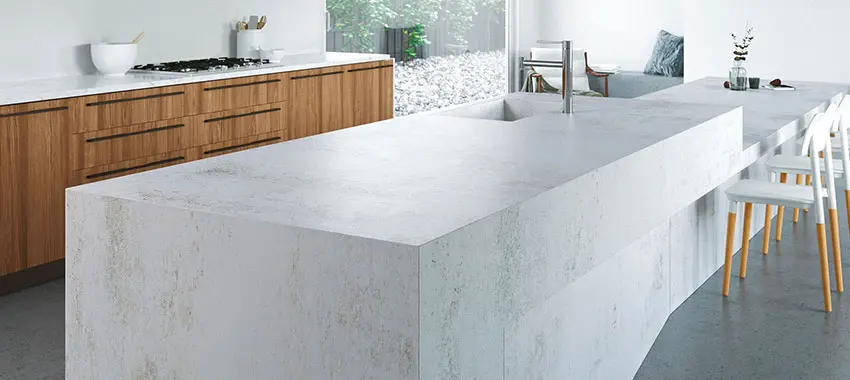
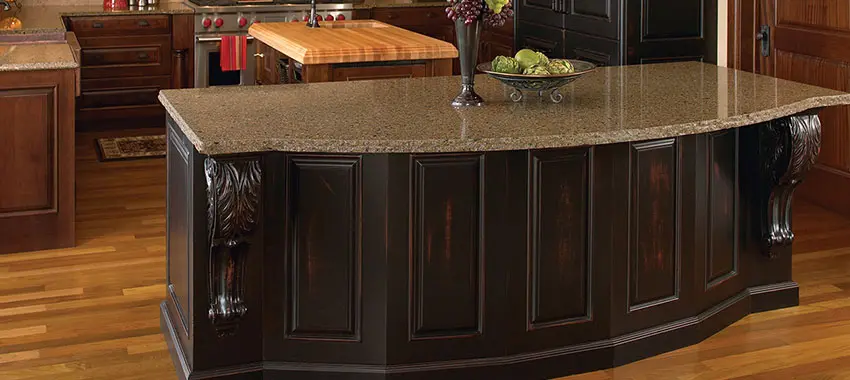
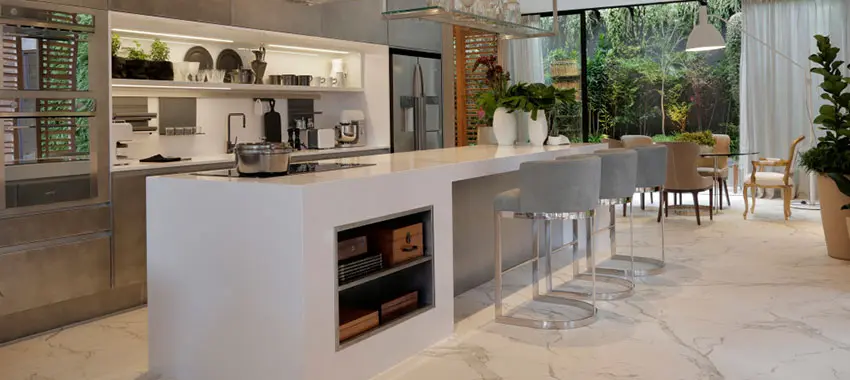
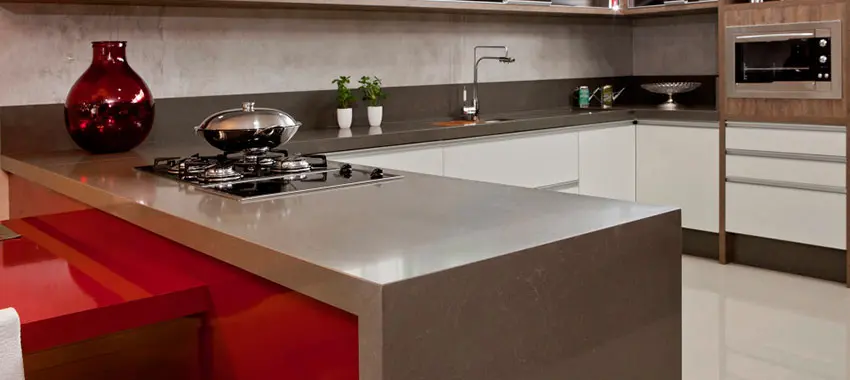
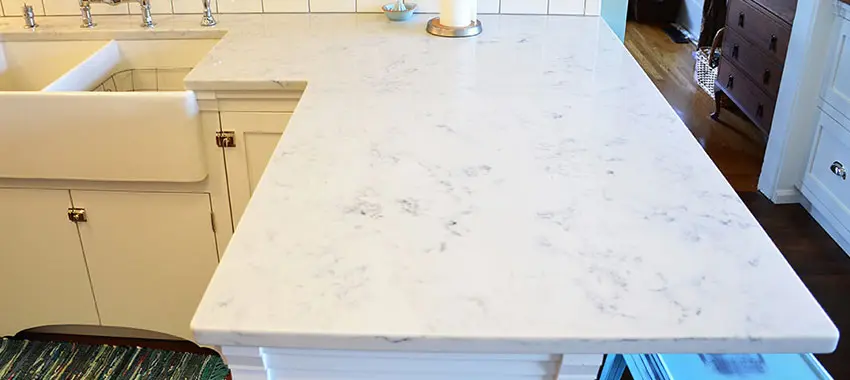
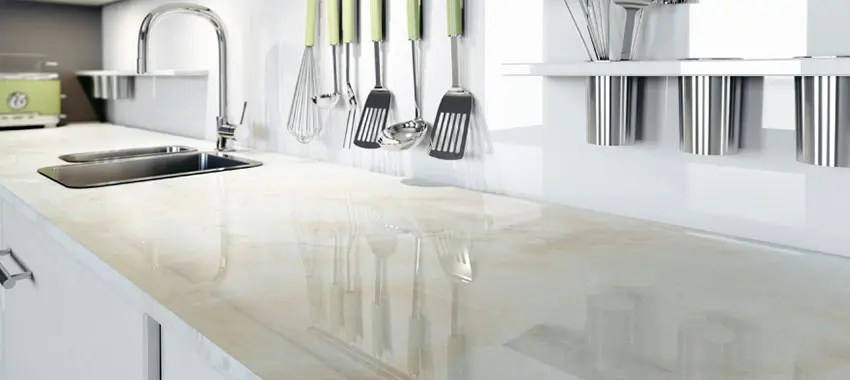
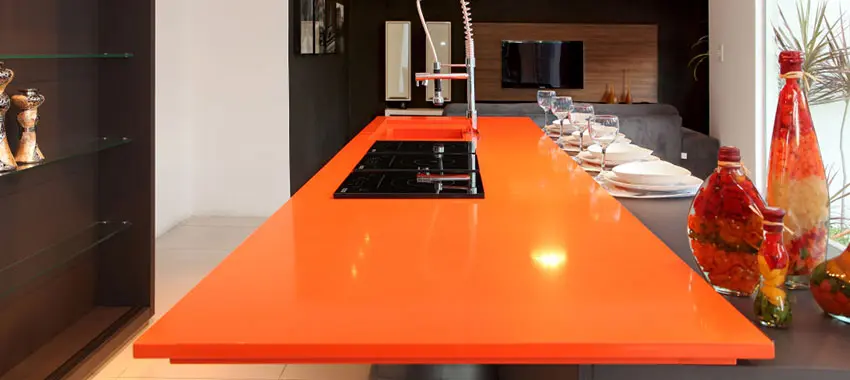
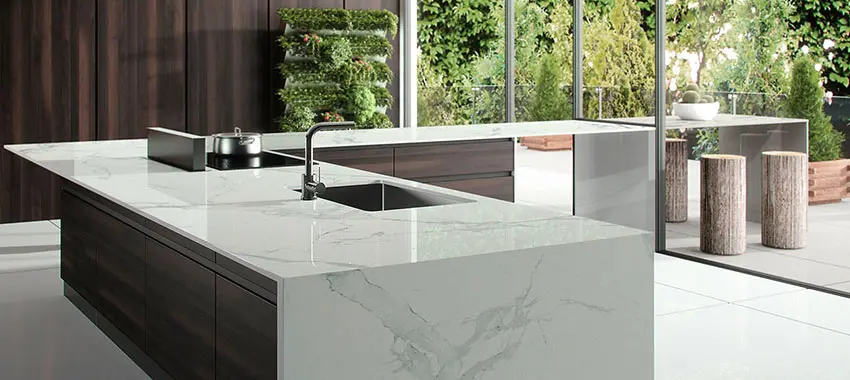
There are many countertop materials to choose from, but they’re divided into two major categories. They’re either naturally sourced or they’re engineered for reinforced strength and durability. Popular natural stones are marble and granite while common engineered stone countertops are solid surface and quartz countertops. Here is everything you need to know about the two different types of countertop stones.
Differences Between Engineered Stone And Natural Stone Countertops
The Material
First and foremost, you need to know what natural stone and engineered stone are.
Natural Stone Countertops
As the name suggests, natural stones are, well, naturally obtained. They’re made by nature and in nature. Some are naturally made by incorporating molten rocks, mica, and other materials fused together at high temperature and pressure, whereas others are made inside mountains, underground, and even in water.
Natural stones are made through natural processes and they have different compositions. They include granite, marble, quartzite, sandstone, limestone, travertine, onyx, soapstone, and many more options. These natural stones have different properties, different looks, different ranges of durability, and they’re just overall amazing.
Engineered Stone Countertops
When it comes to engineered stones, you have to understand that they are man-made materials. If you see the suffix, engineered with any stone or even material, then you can automatically assume that it is man-made and it’s either treated with a mix of natural and synthetic materials or made solely of synthetic materials.
There are many engineered materials out there, but we talk specifically about engineered stone surfaces, they are: quartz, solid surface, porcelain, and sintered stone. Porcelain is not exactly a stone because it’s made of clay, but it’s still categorized in engineered stones.
Now, quartz is a popular one. It’s made by pulverizing rocks and making them into stones with the help of strong binding agents and adhesives. Just like natural stones, the durability, heat resistance, and other properties differ from stone to stone.
Durability
The next thing you can compare between natural stone as well as engineered stone is the durability. You want to select a stone surface that is amazing in quality as well as durable.
Natural Stone Countertops
Most of the natural stones are amazing in durability. You don’t need a lot of convincing when it comes to natural stones, because they are stones that are literally made under high pressure and temperature. They are not made to crack.
Natural stones have a lot of strength and most stones outlive everything else, given that they’re maintained and taken care of. Granite and quartzite are two of the most durable natural stones followed by soapstone, slate, marble, and others.
Engineered Stone Countertops
Engineered stone surfaces are also strong. They’re really amazing when it comes to durability, because they are literally treated to make them stronger and enable them to endure various elements. Quartz, for instance, is an amazing material with outstanding durability even though it lacks a bit in heat resistance due to resin in its composition. However, in strength and durability, it rivals granite. Then, there are sintered stone countertops that are both durable and heat resistant.
Maintenance
Next up is the maintenance. Every stone in this world, whether it be natural or engineered, needs to be maintained. That is just how things go. You need to clean them, seal them, and keep things away that can damage them.
Natural Stone Countertops
When it comes to natural stones, you are usually high maintenance. You can’t just make do with cleaning. You also have to seal these babies because natural stones are porous. That is just something that comes with the properties of natural stones.
They have small holes on the surface that can suck in water and moisture and if you don’t seal your natural stone countertops, then they can cause stains on the surface, which isn’t good at all. If you want a natural stone that doesn’t require sealing, choose soapstone or consider engineered stone surfaces.
Engineered Stone Countertops
Since engineered stone countertops are man-made, their properties can pretty much be controlled. So, it is a very good thing to know that engineered stones like quartz, solid surface, and sintered stone are non-porous.
They don’t have the tendency to suck in moisture present on the surface. So, you can totally get away without sealing these materials. You just need to give these materials a good wipe down and you’ll be good to go.
Variety
People love options. They love to have a list of colors and designs to choose from. Some might think that it adds to the confusion, but it is what it is.
Natural Stone Countertops
There are lots of options in natural stone countertops depending on the materials but the options are not as much as in engineered stone surfaces. Why? Because natural stones are, well, naturally made, so the colors in which natural stones are available are default colors and there is only a slight chance of ever having exotic colors and those unique colors usually cost much more.
In short, when it comes to customized designs and colors in natural stones, you have to put a lid on your choices. You can only choose from what is available. This is good for most people, but some just don’t vibe well with it.
Engineered Stone Countertops
Engineered stone options regarding colors and designs and even patterns are literally endless. You can get almost any color, design, and pattern your heart desires. Since they are man-made, the choices are in the hands of the manufacturer.
There are just as many colors in engineered stones as you can think of and you can even customize them to your liking. This is something that a lot of people love.
Cost
The cost is also something that a lot of people want to know about. You want to invest in a good stone, no doubt, but you don’t want to spend a fortune on them.
When it comes to natural stones, they can run a bit more expensive than man-made materials. However, even engineered stones can be pricier than regular man-made materials. The reason is that engineered stones are treated and reinforced with more strength and properties that make them as hard as rocks and more durable. Anyway, in both types, cost depends hugely on the quality of the stone.
Resistance To Heat & Water
Lastly, you might also want to know about the resistance to heat and scratches and it’s quite interesting.
Natural Stone Countertops
Natural stones are great when it comes to heat resistance. For instance, granite, quartzite, and soapstone can resist temperatures up to 450–500°F, whereas, marble and travertine can only withstand up to 250–300°F.
In the scratch resistance category, there are some natural stones that don’t do so well like soapstone, onyx, and marble. However, there are some that are excellently scratch-resistant like granite, quartzite, basalt, and sandstone.
Engineered Stone Countertops
Engineered stones are great when it comes to scratch resistance, but not so much when it comes to heat. These stones can get blistered by heat really easily such as quartz (withstands temperatures up to 300–350°F).
The main reason why it happens is that these stones have resin in them and they are not able to resist heat, which is why the surface of these stones can get darkened after you put very hot pots and pans on the surface. So, you need to be careful when it comes to both of these stones.
However, there are sintered stone and porcelain slabs that are both excellent in heat and scratch resistance.
Conclusion
Engineered and natural stones both have their own sets of pros and cons. Well, now you know exactly which one to choose in case you’re replacing your kitchen countertops. If you want to take a look at various engineered and natural stone options, consult a quartz countertop contractor Potomac.